Jan. 4, 2013

We’re having fun in
Christchurch. We’re staying with a
wonderful couple, Penny and Peter, and they are lovely hosts. They’ve shown us around the area, given
us rides, fed us, are housing us – they’ve been great. (Penny keeps us supplied
with fresh scones – you know how Richard and I love our scones!)
And Christchurch is
beautiful – it’s known as the Garden City, and it’s true – nearly every house
has a beautiful garden, and this is the best time to see all the flowers. Public places have gardens. Stores have outdoor  gardens. The weather is wonderful, the sky is a
brilliant blue, the sun is shining, we’ve only encountered rain at night. Absolutely gorgeous.
gardens. The weather is wonderful, the sky is a
brilliant blue, the sun is shining, we’ve only encountered rain at night. Absolutely gorgeous.
But Christchurch was hit
with a series of earthquakes beginning in 2010, with the most devastating quake
in Feb. 2011. Even though the
strongest quake was in 2010, the 2011 quake was more catastrophic due to the
shallow depth, direction of motion, and speed of the quake. (And possibly the  shaking motion
reverberating between the hills surrounding the city and the Canterbury Plains
on which it sits.) The epicenter
of this quake was closer to the center of the city, and caused 185 fatalities
and extensive damage to the city.
The infrastructure was damaged to the point of non-existence. Roads were destroyed. Liquefaction caused sand boils that
flooded streets. People in the
city had to walk to their homes, miles away, not knowing what they’d find when
they got there. Others walked home
over hills that came down in the aftershocks, and were killed by falling
rocks. The devastation was
unbelievable.
shaking motion
reverberating between the hills surrounding the city and the Canterbury Plains
on which it sits.) The epicenter
of this quake was closer to the center of the city, and caused 185 fatalities
and extensive damage to the city.
The infrastructure was damaged to the point of non-existence. Roads were destroyed. Liquefaction caused sand boils that
flooded streets. People in the
city had to walk to their homes, miles away, not knowing what they’d find when
they got there. Others walked home
over hills that came down in the aftershocks, and were killed by falling
rocks. The devastation was
unbelievable.
And the buildings –
Christchurch was known for the beautiful Victorian and Art Deco
architecture. Gone, in an
instant. The  Christchurch Cathedral,
most well-known building in the city, lost its spire, and the structure was so
severely damaged that the building has been demolished. The Catholic Cathedral of the Blessed
Sacrament lost towers and domes, and only a partial shell is still standing. Knox Presbyterian Church, St Luke's Anglican Church, Durham Street Methodist Church,
St Paul's-Trinity-Pacific Presbyterian Church, Oxford Terrace Baptist Church,
Holy Trinity Avonside and Holy
Trinity, Lyttelton. Sydenham Heritage Church
Christchurch Cathedral,
most well-known building in the city, lost its spire, and the structure was so
severely damaged that the building has been demolished. The Catholic Cathedral of the Blessed
Sacrament lost towers and domes, and only a partial shell is still standing. Knox Presbyterian Church, St Luke's Anglican Church, Durham Street Methodist Church,
St Paul's-Trinity-Pacific Presbyterian Church, Oxford Terrace Baptist Church,
Holy Trinity Avonside and Holy
Trinity, Lyttelton. Sydenham Heritage Church and
the Beckenham Baptist Church were heavily damaged, and then demolished days
after the earthquake. Hotels,
public and civic buildings, the art gallery, City Hall – all damaged beyond
repair.
and
the Beckenham Baptist Church were heavily damaged, and then demolished days
after the earthquake. Hotels,
public and civic buildings, the art gallery, City Hall – all damaged beyond
repair.
Homes were destroyed,
although many of the lovely Victorian bungalows seem to have survived. There are emptied lots all over town,
full of gravel and rubble, showing that the structure has been taken down. Some existing houses have structural
damage, and families had to move elsewhere. Other  people chose to sleep in tents in their yards, due to
the constant fears accompanying the continuous aftershocks and repeating
quakes, which have continued almost daily for nearly two years. And still other families are awaiting
insurance settlements – since the insurance companies have insisted on waiting
until the area has been free of tremors and quakes for three months before
making payments.
people chose to sleep in tents in their yards, due to
the constant fears accompanying the continuous aftershocks and repeating
quakes, which have continued almost daily for nearly two years. And still other families are awaiting
insurance settlements – since the insurance companies have insisted on waiting
until the area has been free of tremors and quakes for three months before
making payments.
Jobs were lost. Businesses were destroyed, along with
the buildings. Over half of the
fatalities were in the CTV building, which apparently was designed by an “architect”
who really wasn’t qualified, having falsified his credentials by stealing
someone else’s record of education and training. (Can you imagine????)
So we are visiting a city
that is still demolishing buildings.
Still dealing with piles and piles and mounds  and mountains of
rubble. Still suffering the
effects of PTSD which a natural disaster of this magnitude will cause. Still rebuilding, still trying to
figure out what to do next, and how to prevent such widespread damage next
time. Because the location of the
city, having been built on a gravel plain and swamp that basically is in the
caldera of an ancient extinct volcano, and in the shadow of the Southern Alps,
makes the area susceptible for other quakes, other damage. How does one rebuild a city knowing
that areas are never really going to be safe?
and mountains of
rubble. Still suffering the
effects of PTSD which a natural disaster of this magnitude will cause. Still rebuilding, still trying to
figure out what to do next, and how to prevent such widespread damage next
time. Because the location of the
city, having been built on a gravel plain and swamp that basically is in the
caldera of an ancient extinct volcano, and in the shadow of the Southern Alps,
makes the area susceptible for other quakes, other damage. How does one rebuild a city knowing
that areas are never really going to be safe?  (The bedrock isn’t solid, it’s more like shattered glass –
so during the Feb. 2011 quake, the movement was in all directions, and the
crust of the earth literally separated from the mantle – the geologist
described it as being in a state of freefall.)
(The bedrock isn’t solid, it’s more like shattered glass –
so during the Feb. 2011 quake, the movement was in all directions, and the
crust of the earth literally separated from the mantle – the geologist
described it as being in a state of freefall.)
And yet, the majority of
people have picked up the pieces and are going forward, keeping their gardens
groomed and rebuilding as they can, starting up new  businesses or renovating
former ones. Empty lots are turned
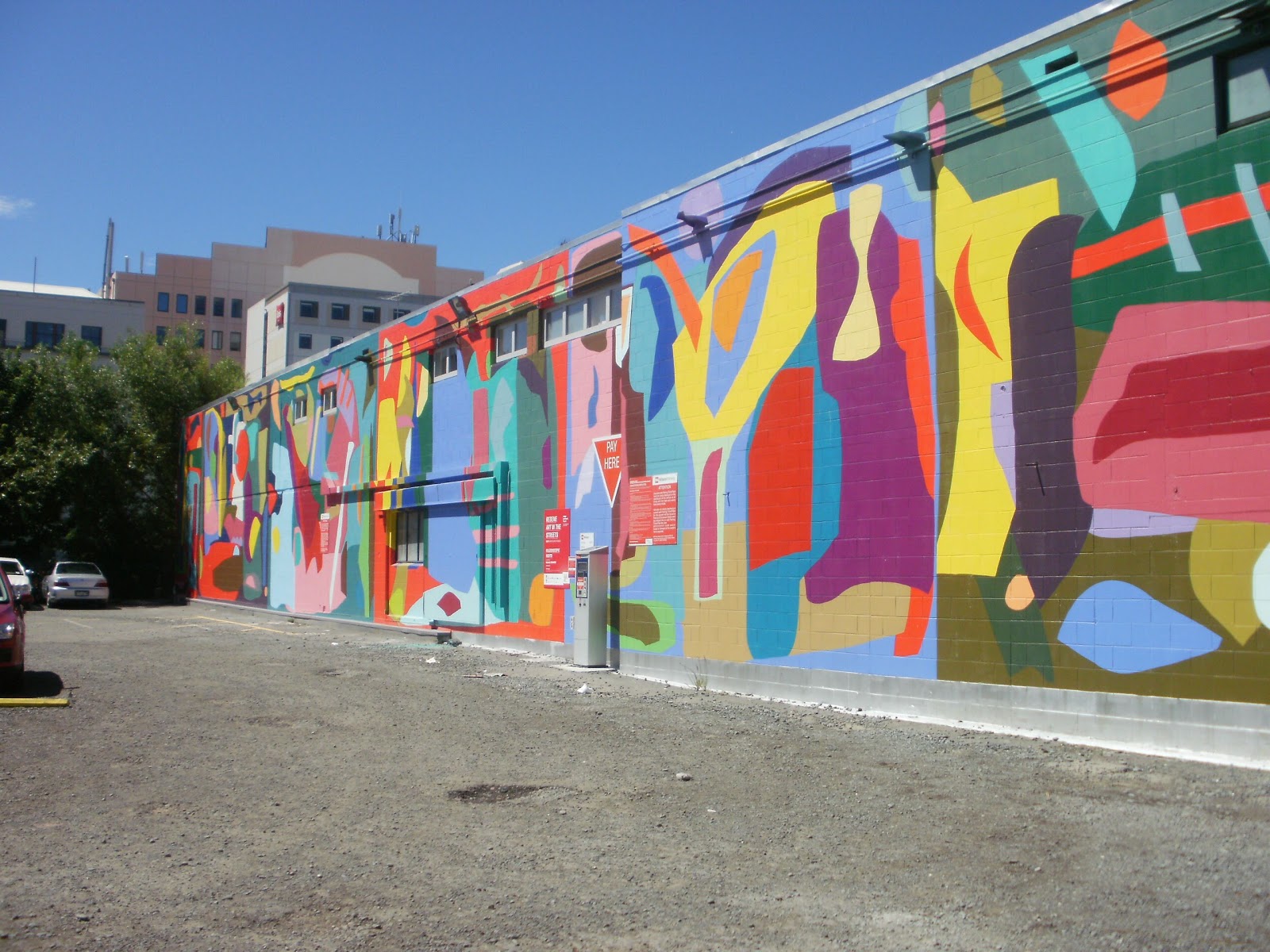
into car parks. The local library, only just re-opened and propped up by bright red braces holding the structure in place, decorated the metal braces for the Christmas holiday. The central
business district has become the site of ReStart – a pedestrian shopping mall
of businesses housed in creatively used shipping containers. Colors such as ReStart Red and ReStart
Violet and ReStart Aqua are featured in the shipping containers, food areas,
awnings, and an incredible abstract mural. ArtBreak coordinates musical entertainment, and tourists
walk around
businesses or renovating
former ones. Empty lots are turned
into car parks. The local library, only just re-opened and propped up by bright red braces holding the structure in place, decorated the metal braces for the Christmas holiday. The central
business district has become the site of ReStart – a pedestrian shopping mall
of businesses housed in creatively used shipping containers. Colors such as ReStart Red and ReStart
Violet and ReStart Aqua are featured in the shipping containers, food areas,
awnings, and an incredible abstract mural. ArtBreak coordinates musical entertainment, and tourists
walk around  fenced-off unsafe buildings to shop and eat and enjoy the ReStart
City. ReSene works with artists to
decorate newly bare building walls, where a detached building was removed. And despite the temporary nature of
this area, despite the mountains of rubble and miles of chain link fencing,
there are still incredible displays of flowers everywhere – because this is the
City of Gardens. And one can draw all kinds of symbolism and write all kinds of metaphors about flowers growing out of the rubble, life coming forth from destruction, flowers on the grave,
fenced-off unsafe buildings to shop and eat and enjoy the ReStart
City. ReSene works with artists to
decorate newly bare building walls, where a detached building was removed. And despite the temporary nature of
this area, despite the mountains of rubble and miles of chain link fencing,
there are still incredible displays of flowers everywhere – because this is the
City of Gardens. And one can draw all kinds of symbolism and write all kinds of metaphors about flowers growing out of the rubble, life coming forth from destruction, flowers on the grave,  whatever. But I think it's more matter-of-fact and practical than that – this is the City of Gardens. That means flowers. The Christchurch identity is linked to flowers. Therefore, keep up the flowers and the gardens.
There is a feeling of hope,
a feeling of determination. The
human spirit somehow chooses to continue on, despite all odds. It’s like the Caribbean after one of
our hurricanes – everyone pitches in to help, everyone shares, and everyone
works to  move on together, at least for a while. For weeks after the February quake, students and farmers and
others came to Christchurch to shovel out wet sand, pick up rubble, help people
get their homes and businesses and lives back together. Others sent food and water. Neighboring countries sent workers and
monetary aid. Help came across the
ocean. But the people who live
here, grateful as they are for all the outside help, have chosen to continue to
make this place their home, and they are the ones responsible for the rebuilding,
and for this feeling of hope.
move on together, at least for a while. For weeks after the February quake, students and farmers and
others came to Christchurch to shovel out wet sand, pick up rubble, help people
get their homes and businesses and lives back together. Others sent food and water. Neighboring countries sent workers and
monetary aid. Help came across the
ocean. But the people who live
here, grateful as they are for all the outside help, have chosen to continue to
make this place their home, and they are the ones responsible for the rebuilding,
and for this feeling of hope.
And these very nice people
who have taken us in for a few days – who had to clear the wet silt that
bubbled up in their garden – who had to rebuild parts of their home – who had
to have the kitchen floor foundation drilled so the water and silt that bubbled
up could be suctioned out – who still have driveway and outer-wall damage – who
lost friends, and those friends’ family members – this couple took in two cats
rescued after the earthquake. Not
only people lost their homes – pets lost their homes, and maybe their
owners. So people such as our
hosts opened their homes to abandoned pets, who needed new homes.
I’m often amazed by the
resiliency of the human spirit. We
can lose everything, and we are willing to pick up and start over. We rarely give up. We might despair temporarily, but then
we move on. We continue.
And that is what
Christchurch is now all about – rebuilding; continuing; moving on, maybe not
bigger or better than before. But
moving on stronger.

 There’s something about the
light, the buildings, the wide main boulevard (State
There’s something about the
light, the buildings, the wide main boulevard (State  Highway 1, also known as Thames
Street) with the tree-lined median down the center, that just evokes a more
genteel period of time, despite the cars whizzing along. As if there is a bit of a time warp, so
that the modern period has merged with Victorian New Zealand, creating its own
time zone. Dentist offices appear
to be little English cottages in the midst of a garden. Rest homes have titles like Jane Austen
novels. (Really, I saw Northanger
Rest Home.) We are transported to
a lovely seaside resort full of historic buildings, under which penguins
nest. This is a special place.
Highway 1, also known as Thames
Street) with the tree-lined median down the center, that just evokes a more
genteel period of time, despite the cars whizzing along. As if there is a bit of a time warp, so
that the modern period has merged with Victorian New Zealand, creating its own
time zone. Dentist offices appear
to be little English cottages in the midst of a garden. Rest homes have titles like Jane Austen
novels. (Really, I saw Northanger
Rest Home.) We are transported to
a lovely seaside resort full of historic buildings, under which penguins
nest. This is a special place.


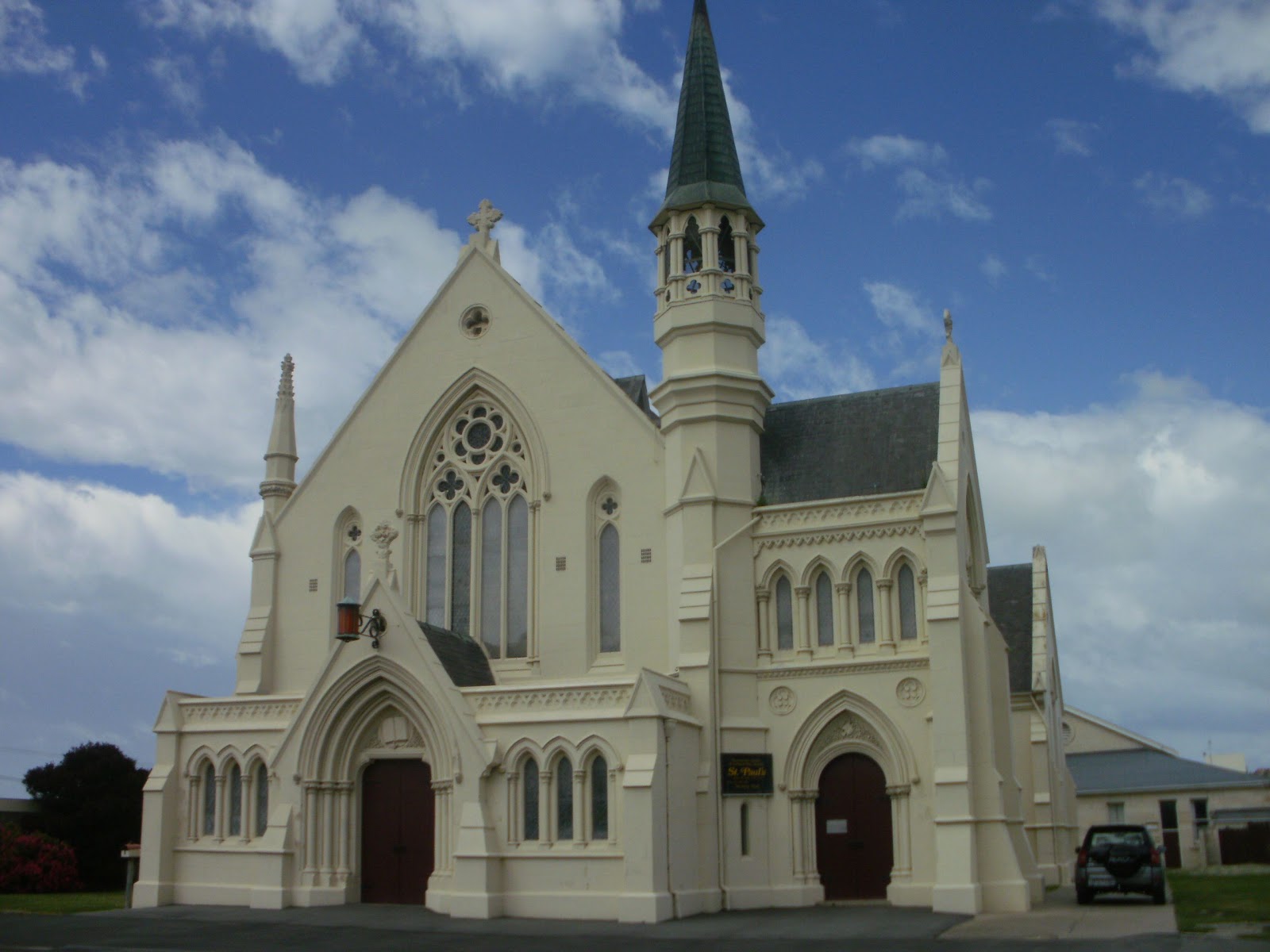 pillars and pediments and capitals and raking cornices. At the time (1880-ish), Oamaru was
about the same size as Los Angeles was back then. And, as with many ports, there were the support services of
bars (saloons?), brothels, hotels, and such.
pillars and pediments and capitals and raking cornices. At the time (1880-ish), Oamaru was
about the same size as Los Angeles was back then. And, as with many ports, there were the support services of
bars (saloons?), brothels, hotels, and such.