NOTE: We're now in Valparaiso, Chile. But I have about 15 or so blogs from our cruise, so I'm going to post these a few per day, in chronological order. I'll try to remember to add this note so that people know to go back a few days.

2
February 2020
We’re
currently on a cruise, and have just pulled out of the port of Montevideo,
Uruguay. Montevideo is  practically right
across the Rio Plata from Buenos Aires, and it’s only a several hour trip by
the local boat. But cruises are about
slower travel and full days in port,
practically right
across the Rio Plata from Buenos Aires, and it’s only a several hour trip by
the local boat. But cruises are about
slower travel and full days in port,  so our ship left Buenos Aires yesterday
evening, and “arrived” in Montevideo this morning.
so our ship left Buenos Aires yesterday
evening, and “arrived” in Montevideo this morning.
 practically right
across the Rio Plata from Buenos Aires, and it’s only a several hour trip by
the local boat. But cruises are about
slower travel and full days in port,
practically right
across the Rio Plata from Buenos Aires, and it’s only a several hour trip by
the local boat. But cruises are about
slower travel and full days in port,  so our ship left Buenos Aires yesterday
evening, and “arrived” in Montevideo this morning.
so our ship left Buenos Aires yesterday
evening, and “arrived” in Montevideo this morning.
I opted
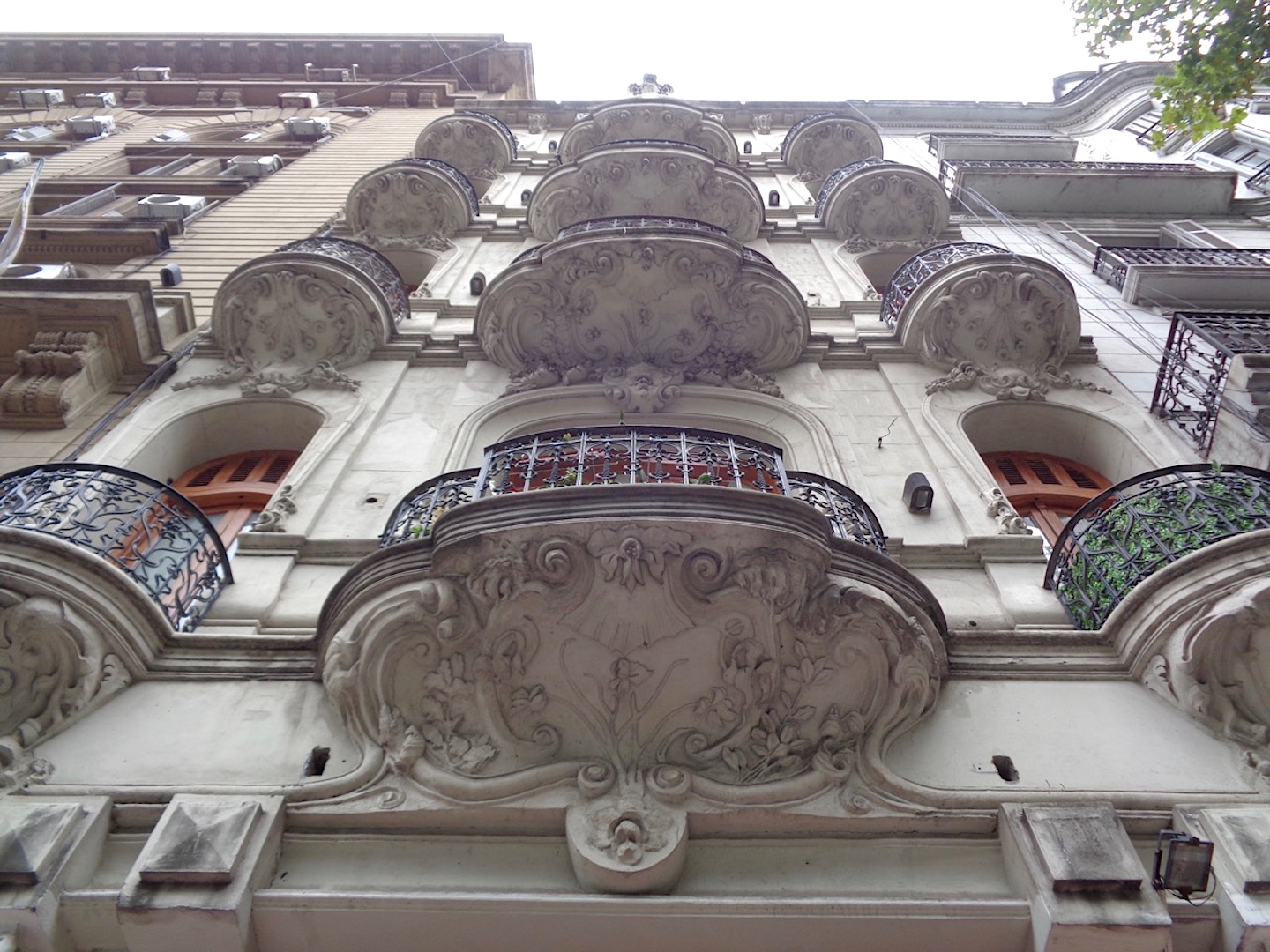
to just wander around the city a bit, making in a slow Sunday visit. Montevideo is an interesting city, built with
architecture similar  to Buenos Aires, but the old city isn’t kept up as
well. So the gorgeous old buildings with
ornate balconies and decorative trim are beginning to be a bit run down, while
the former
to Buenos Aires, but the old city isn’t kept up as
well. So the gorgeous old buildings with
ornate balconies and decorative trim are beginning to be a bit run down, while
the former  businesses in this area have moved to brand new shiny high rises in
the newer section of the city.
businesses in this area have moved to brand new shiny high rises in
the newer section of the city.
 to Buenos Aires, but the old city isn’t kept up as
well. So the gorgeous old buildings with
ornate balconies and decorative trim are beginning to be a bit run down, while
the former
to Buenos Aires, but the old city isn’t kept up as
well. So the gorgeous old buildings with
ornate balconies and decorative trim are beginning to be a bit run down, while
the former  businesses in this area have moved to brand new shiny high rises in
the newer section of the city.
businesses in this area have moved to brand new shiny high rises in
the newer section of the city.
But the
old city is in walking distance of the port and docks, so that was where I
wandered. Many cruise ship guests  were
on tours or the hop-on-hop-off buses, so town wasn’t too terribly crowded.
were
on tours or the hop-on-hop-off buses, so town wasn’t too terribly crowded.
 were
on tours or the hop-on-hop-off buses, so town wasn’t too terribly crowded.
were
on tours or the hop-on-hop-off buses, so town wasn’t too terribly crowded.
I know I
haven’t talked much about the history of Argentina, but most of North, South,
Central, Meso, and  Caribbean Americas have the same sort of history: indigenous people once lived there. Europeans explorers-conquistadors-colonists
came
Caribbean Americas have the same sort of history: indigenous people once lived there. Europeans explorers-conquistadors-colonists
came  somewhere in the 15th-16th centuries and killed off
some of the indigenous peoples, took the land and natural resources, and
established colonies in the name of their monarchs. Wars back and forth, wars with the indigenous
populations, land grabs
somewhere in the 15th-16th centuries and killed off
some of the indigenous peoples, took the land and natural resources, and
established colonies in the name of their monarchs. Wars back and forth, wars with the indigenous
populations, land grabs  and land trades and eventually treaties – and at some
point, the national borders were drawn and the countries eventually gained
independence. In the Caribbean, there
are a number of islands
and land trades and eventually treaties – and at some
point, the national borders were drawn and the countries eventually gained
independence. In the Caribbean, there
are a number of islands  that are considered territories of various other
nations, but for the most part the former colonies are all separate nations.
that are considered territories of various other
nations, but for the most part the former colonies are all separate nations.
 Caribbean Americas have the same sort of history: indigenous people once lived there. Europeans explorers-conquistadors-colonists
came
Caribbean Americas have the same sort of history: indigenous people once lived there. Europeans explorers-conquistadors-colonists
came  somewhere in the 15th-16th centuries and killed off
some of the indigenous peoples, took the land and natural resources, and
established colonies in the name of their monarchs. Wars back and forth, wars with the indigenous
populations, land grabs
somewhere in the 15th-16th centuries and killed off
some of the indigenous peoples, took the land and natural resources, and
established colonies in the name of their monarchs. Wars back and forth, wars with the indigenous
populations, land grabs  and land trades and eventually treaties – and at some
point, the national borders were drawn and the countries eventually gained
independence. In the Caribbean, there
are a number of islands
and land trades and eventually treaties – and at some
point, the national borders were drawn and the countries eventually gained
independence. In the Caribbean, there
are a number of islands  that are considered territories of various other
nations, but for the most part the former colonies are all separate nations.
that are considered territories of various other
nations, but for the most part the former colonies are all separate nations.
So,
Uruguay speaks Spanish the way people do in Argentina.  The flags both feature a sun that looks
vaguely like a compass rose, with light blue stripes. And people seem to visit back and forth, very
easily.
The flags both feature a sun that looks
vaguely like a compass rose, with light blue stripes. And people seem to visit back and forth, very
easily.
 The flags both feature a sun that looks
vaguely like a compass rose, with light blue stripes. And people seem to visit back and forth, very
easily.
The flags both feature a sun that looks
vaguely like a compass rose, with light blue stripes. And people seem to visit back and forth, very
easily.
But
Uruguay is a  very small country, among the smallest in South America, and it’s
sort of squished between Brazil to the north and Argentina to the west and
south across the river.
very small country, among the smallest in South America, and it’s
sort of squished between Brazil to the north and Argentina to the west and
south across the river.  Uruguay almost
looks like an
Uruguay almost
looks like an  afterthought.
 very small country, among the smallest in South America, and it’s
sort of squished between Brazil to the north and Argentina to the west and
south across the river.
very small country, among the smallest in South America, and it’s
sort of squished between Brazil to the north and Argentina to the west and
south across the river.  Uruguay almost
looks like an
Uruguay almost
looks like an  afterthought.
Not that
I want to give this country a complex.
They have beautiful beaches and a  relaxed vibe. It’s a nice little country.
 relaxed vibe. It’s a nice little country.
Uruguay
and Argentina also share a penchant for alfajores. This is a sweet  treat, and alfajores (plural
of alfajore) is pronounced al-fah-HOR-esz. Alfajores are made with two plain cookies,
sometimes chocolate and sometimes vanilla.
Then dulce de leche is sandwiched between the two cookies. Usually, the whole thing is dipped in
treat, and alfajores (plural
of alfajore) is pronounced al-fah-HOR-esz. Alfajores are made with two plain cookies,
sometimes chocolate and sometimes vanilla.
Then dulce de leche is sandwiched between the two cookies. Usually, the whole thing is dipped in  either
white or dark chocolate, but sometimes it’s left uncovered. There are artisanal alfajores shops all around,
and every supermarket to mini mart sells a variety of alfajores.
either
white or dark chocolate, but sometimes it’s left uncovered. There are artisanal alfajores shops all around,
and every supermarket to mini mart sells a variety of alfajores.  Because everyone has their personal
preference. Not being a big fan of
alfajores, I prefer the chocolate cookie with dark chocolate couverture, and
then I put the alfajore in the freezer.
Yup, freeze that dulce de leche nice and solid, so it turns into more of
a solid
Because everyone has their personal
preference. Not being a big fan of
alfajores, I prefer the chocolate cookie with dark chocolate couverture, and
then I put the alfajore in the freezer.
Yup, freeze that dulce de leche nice and solid, so it turns into more of
a solid  caramel consistency. They
actually are pretty tasty this way. I’ve
tried alfajores straight from the store, and the dulce de leche tends to be too
soft for my taste.
caramel consistency. They
actually are pretty tasty this way. I’ve
tried alfajores straight from the store, and the dulce de leche tends to be too
soft for my taste.
 treat, and alfajores (plural
of alfajore) is pronounced al-fah-HOR-esz. Alfajores are made with two plain cookies,
sometimes chocolate and sometimes vanilla.
Then dulce de leche is sandwiched between the two cookies. Usually, the whole thing is dipped in
treat, and alfajores (plural
of alfajore) is pronounced al-fah-HOR-esz. Alfajores are made with two plain cookies,
sometimes chocolate and sometimes vanilla.
Then dulce de leche is sandwiched between the two cookies. Usually, the whole thing is dipped in  either
white or dark chocolate, but sometimes it’s left uncovered. There are artisanal alfajores shops all around,
and every supermarket to mini mart sells a variety of alfajores.
either
white or dark chocolate, but sometimes it’s left uncovered. There are artisanal alfajores shops all around,
and every supermarket to mini mart sells a variety of alfajores.  Because everyone has their personal
preference. Not being a big fan of
alfajores, I prefer the chocolate cookie with dark chocolate couverture, and
then I put the alfajore in the freezer.
Yup, freeze that dulce de leche nice and solid, so it turns into more of
a solid
Because everyone has their personal
preference. Not being a big fan of
alfajores, I prefer the chocolate cookie with dark chocolate couverture, and
then I put the alfajore in the freezer.
Yup, freeze that dulce de leche nice and solid, so it turns into more of
a solid  caramel consistency. They
actually are pretty tasty this way. I’ve
tried alfajores straight from the store, and the dulce de leche tends to be too
soft for my taste.
caramel consistency. They
actually are pretty tasty this way. I’ve
tried alfajores straight from the store, and the dulce de leche tends to be too
soft for my taste.
This
particular alfajore shop had great paintings outside, though, so I had to take
a couple of  photos.
 photos.
I
wandered up and down the pedestrian street, which seems to feature artisans
markets and eateries. As always, I found
interesting buildings with beautiful doors, or maybe stark white houses with
vibrant bougainvillea growing outside.
 One
thing I noticed, and of course had to photograph, were the mini mosaics filling
in for missing sidewalk tiles. They
weren’t pictorial or anything – more like mini random works of abstract art,
where scrap tile
One
thing I noticed, and of course had to photograph, were the mini mosaics filling
in for missing sidewalk tiles. They
weren’t pictorial or anything – more like mini random works of abstract art,
where scrap tile  was used to fill in the space where a larger concrete tile
broke or came out. I suspect these
started out as mostly utilitarian, to prevent falls and lawsuits, or maybe to
keep mosquitoes from breeding in puddles that would form in the space. But they’ve become little pieces of art, and
I thought they were just lovely.
was used to fill in the space where a larger concrete tile
broke or came out. I suspect these
started out as mostly utilitarian, to prevent falls and lawsuits, or maybe to
keep mosquitoes from breeding in puddles that would form in the space. But they’ve become little pieces of art, and
I thought they were just lovely.
There
was also an interesting café that was quite crowded, and seemed very
popular. I didn’t eat there, but they
had a hallway covered in colorful flyers or notices. The English and Spanish don’t necessarily
make sense, but all together they make an interesting sort of wall of urban
art. It was just a fun kind of wall, and
I spent a few minutes reading the signs, and ended up taking a couple of
photos.
I
started finding tile walls that matched the scrap tile in the sidewalk, so of
course had to immortalize that too.
There
was a lovely fruit market, complete with ropes of garlic, hanging peppers, a
few flags, and crates of fruit, all creating their own little mosaic on the
sidewalk.
There
were a couple of murals I encountered.
The first was next to an apartment building, and I’m not sure what it
means. The woman is covered in fruits
and vegs. Is she Primavera? Springtime?
Maybe Mother Earth, with all of the produce? Or is she promoting eating more healthy
foods? Maybe becoming vegan? I have no idea, but it was an interesting
mural, especially against that blue blue sky.
The
second mural was also interesting – one young woman’s face was superimposed
over a series of young women who had linking arms, but their faces weren’t
included. They were obviously nameless
and faceless, and the whole thing was painted in muted colors with sort of grey
overtones. It made me really curious, so
after taking several photos I started walking down the street but found a woman
walking toward me, in an apron, so I asked if she was from Montevideo. Si, yes, she was. So I asked if she knew the mural at the
corner. Yes, she did. And I asked what was the mural about, with
all these young women. Sadly, the answer
was that they represent the young women who have been killed, who have been
murdered. This mural is their
memorial. I didn’t know if there was a
specific incident, if murder of women is on the rise, or exactly what happened
that inspired this mural – my Spanish isn’t that good, and this woman was in
the middle of her work day. But it kind
of makes sense that they would be nameless and faceless, because as we know
around the world, too many women are murdered, and these women could be
anybody. They could be any of us. They could be ALL of us. So yes, this was a sad and sobering
mural.
After
that mural, I needed cheering up. I
found a woman walking down up the street holding a tiny orange striped kitten,
and I asked about him. In our combined
Spanglish, I learned that yes, he was a boy cat, she found him three days ago,
and his name was Tony. So I pet little
Tony on his head, and he nuzzled into my hand, and the world didn’t seem quite
as bleak as the mural felt.
That was
about it. I chatted with a few people on
the street, and eventually made my way back to the ship. It was a warm day, and I try to avoid buying
more plastic water bottles constantly – so I made sure to come back to the ship
for lunch and lots of cold water. I
know, on St. Thomas we used to laugh about the cruise ship tourists who had to
get back to their ships for lunch. But,
ah well. Now I understand. Though my excuse, should anyone ask, is that
our time to be back on board was 3 PM, so I didn’t want to miss that.
We’re
now heading out the Rio Plata, and will head southward. The captain said the seas are fairly calm, so
it should be a nice day at sea until our next port.