6 November 2015
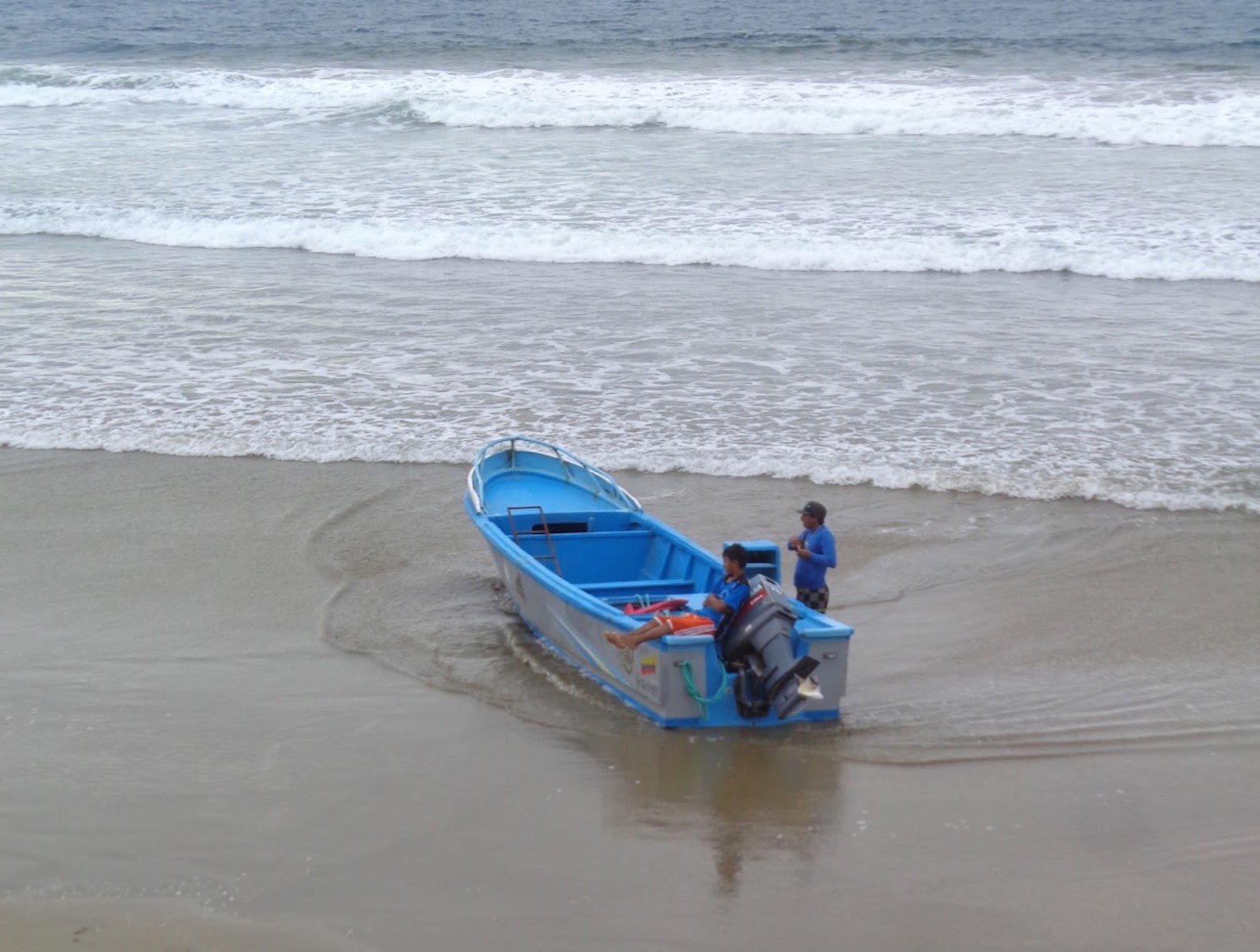
 We spent two days in Puerto Lopez, which turned out to be a pretty little beach town, very traditional and not all
  touristy and kitschy like Montañita.
We mostly wandered around the town, chatted with some people, and hung out at the beach.
touristy and kitschy like Montañita.
We mostly wandered around the town, chatted with some people, and hung out at the beach.
 Several walls seemed to be devoted to painted murals, mostly featuring either the ocean or the traditional and indigenous arts of the region.
 Puerto Lopez is well-known regionally for whale watching, with trips to see the orcas, humpbacks, and other whales that migrate through this part of the
  Pacific.
We opted for the more casual time, and either walked the beach or rented chairs in the shade.
Pacific.
We opted for the more casual time, and either walked the beach or rented chairs in the shade.
 One morning, we talked with a tour guide who had been escorting a group of Dutch tourists around the country, but she was heading back to Quito. Anyway, she's the person who
  identified our animals from Las Cajas National Park as being llamas, not alpacas.
She explained that yes, this route was once known as the Ruta del
identified our animals from Las Cajas National Park as being llamas, not alpacas.
She explained that yes, this route was once known as the Ruta del  Sol, but the spondylus shells were used as money so the Ministry of Tourism decided to change the name, preserving the history of the local shells.
 She
She  also
also  explained that the people living on the coast don't celebrate the Day of the Deceased (2 November) as much as people in the foothills,
  highlands, and mountain regions. While the Day of the Deceased is sort of Catholic, more of the traditions date back to the beliefs and celebrations of the indigenous people. So the more celebratory events occur in the more traditional and indigenous communities. Places like the coastal towns are comprised of people who are of more Spanish descent, or even from other places in South America, and so there might be some casual picnic at the cemetery, but it's more of a social thing here.
Our tour lady also pointed out that it isn't usual to find the guaguas, the bread babies, in the coast towns. Just not part of the traditions here.
So while we enjoyed the beach, we missed out on the colorful celebrations of the Day of the Deceased.
The other person we got to know was one of the hotel workers, a nice young man from the area, who is going to university in Kentucky. (He's a chemistry major, working on his doctorate, and currently doing cancer research, or rather a cure.) He was very interesting, as well as helpful since his English was great. Anyway, he sent us to a fabulous Italian restaurant for dinner one night, which we enjoyed very much. (Bellitalia restaurant, right in Puerto Lopez. They don't have a website, but tripadvisor lists them as the top-rated restaurant in town. Definitely eat here if you get to Puerto Lopez!)
Well, portions in Ecuador tend to be way too much food for me, especially in hot weather. I enjoyed my cannelloni con ricotta i espinaci (cannelloni stuffed with ricotta and spinach), but I could only eat half of my huge portion. So after chatting with the owner and his wife, in some strange mix of English, Spanish, and Italian, I had my leftovers boxed up. We didn't have a fridge in our hotel room, so I found Mr Young Chemist Research Guy, and gave him the extra cannelloni - and he gave me a big hug! It was funny but sweet.
(And no, I don't know Pink Hat Lady - I just liked her bright pink hat against the gorgeous aqua water.)
 So after our two days, we needed to head back toward Guayaquil. We ended up opting to drive all the way to the city, since we couldn't
  find a hotel in the small towns along the inland route.
Traffic was HORRENDOUS! We thought most people
find a hotel in the small towns along the inland route.
Traffic was HORRENDOUS! We thought most people  would have headed home after the long weekend, rather than on Tuesday. But apparently many people also took Tuesday off from work, and were driving home then.
There were a few areas where police were out keeping an
would have headed home after the long weekend, rather than on Tuesday. But apparently many people also took Tuesday off from work, and were driving home then.
There were a few areas where police were out keeping an  eye on traffic, with almost like checkpoints. At one in particular, one officer seemed to be filming every driver and passenger in every single vehicle, on his smart phone. NO idea if this was to record drivers, or if they were looking for one person in particular and were using some kind of facial recognition app. It was really bizarre!
 Plus Ecuadorean drivers don't necessarily follow the traditional rules of the road. We saw cars, trucks, even buses driving on the wrong side of the road, despite oncoming traffic. Or driving along the shoulder side of the lane, even though the shoulder
  was only half as wide as the actual lane for traffic - and then cutting into the lane, slowing traffic even more. It was a mess!
We finally arrived in
was only half as wide as the actual lane for traffic - and then cutting into the lane, slowing traffic even more. It was a mess!
We finally arrived in  Guayaquil, after hours on the road, but without a hotel reservation. We figured we'd head to the airport and get a room in the same hotel where we'd stayed previously, especially since we were returning the car the next morning. Well, somehow we missed the signs for the airport, and ended up heading into the city. So we pulled into a strip mall, and asked two policemen for directions. But with their minimal English, and our minimal Spanish, we couldn't quite figure out all the directions.
So what do cops do in such a situation? Well, in Ecuador, they call for backup, in a police car. To guide us, flashing lights and all, onto the highway heading in the right direction. Stop at a bus stop on the highway to hand over their smart phone, using a translating app, telling us which way to head, go over the bridge, the street you want is on the other side of the bridge. Uh, okay! We followed our police escort, followed their directions, and found our old friendly hotel. Whew!
It's always an adventure!
So we're settled in our hotel, a quaint place not far from the huge Guayas River, and apparently owned by Jewish people - we can tell because there's a mezuzah on every door. We've had to change rooms a few times to accommodate the hotel as they've had various groups coming through, including what seems to be contestants for Miss Ecuador Universe Transgender (according to their sashes). On our third move in three days, we've ended up in what we're calling the Presidential Suite - a large and lovely room with a narrow balcony, and windows on three sides.
We'll enjoy this room until Monday, when we head off on new adventures!
Guayaquil, after hours on the road, but without a hotel reservation. We figured we'd head to the airport and get a room in the same hotel where we'd stayed previously, especially since we were returning the car the next morning. Well, somehow we missed the signs for the airport, and ended up heading into the city. So we pulled into a strip mall, and asked two policemen for directions. But with their minimal English, and our minimal Spanish, we couldn't quite figure out all the directions.
So what do cops do in such a situation? Well, in Ecuador, they call for backup, in a police car. To guide us, flashing lights and all, onto the highway heading in the right direction. Stop at a bus stop on the highway to hand over their smart phone, using a translating app, telling us which way to head, go over the bridge, the street you want is on the other side of the bridge. Uh, okay! We followed our police escort, followed their directions, and found our old friendly hotel. Whew!
It's always an adventure!
So we're settled in our hotel, a quaint place not far from the huge Guayas River, and apparently owned by Jewish people - we can tell because there's a mezuzah on every door. We've had to change rooms a few times to accommodate the hotel as they've had various groups coming through, including what seems to be contestants for Miss Ecuador Universe Transgender (according to their sashes). On our third move in three days, we've ended up in what we're calling the Presidential Suite - a large and lovely room with a narrow balcony, and windows on three sides.
We'll enjoy this room until Monday, when we head off on new adventures!
2 November 2015
 We thought we were taking the Via de la Costa, and then the Ruta del Sol - the coast road, and then
  the sun route. And of course the map has one number for each road, but the actual road has a different number. Just to keep tourists on their toes.
 But then, what everyone calls the Ruta del Sol has signs along the way saying Ruta del Spondylus. I thought maybe this was a
  seashell (concha) or a sea sponge (esponje). No, it turns out the Spondylus is a certain kind of bivalve mollusk - meaning it's an oyster. Or at least a certain type of oyster.
 Anyway, it
  explains why we've gotten a bit lost and turned around several times - the map says highway 70, the highway says it's number 40, and then the name is all wrong anyway. Yeah, it takes a little while to figure this all out.
After our night in Guayaquil, we managed to find our way to the Via de la Costa, also known as Highway 40 (but marked 70 on the map). We drove through Santa Elena, which is a cute town but not right by the beach. So we ended up in Salinas, because we wanted that beach time.
explains why we've gotten a bit lost and turned around several times - the map says highway 70, the highway says it's number 40, and then the name is all wrong anyway. Yeah, it takes a little while to figure this all out.
After our night in Guayaquil, we managed to find our way to the Via de la Costa, also known as Highway 40 (but marked 70 on the map). We drove through Santa Elena, which is a cute town but not right by the beach. So we ended up in Salinas, because we wanted that beach time.
 Salinas is one of those beach towns that probably is booming in season, but quiet and maybe a little depressed during off season. We prefer off season, even if some
  places are closed or hours are curtailed - it's just quieter and more tranquil, which is what the beach is all about.
If you drive
places are closed or hours are curtailed - it's just quieter and more tranquil, which is what the beach is all about.
If you drive  through Salinas (on 40 or 70), you can get to the westernmost point in all of South America - named La Chocolatera, because the churning waves supposedly look like a freshly mixed cup of hot chocolate. Or the foam does, anyway.
 Well you KNOW that if it's named for chocolate, Richard and I will go and check it out.
We drove along 40/70, and followed the signs to La Chocolatera. Which led to a
Well you KNOW that if it's named for chocolate, Richard and I will go and check it out.
We drove along 40/70, and followed the signs to La Chocolatera. Which led to a  military base and artillery range, or something like that. Just to make life more confusing, one actually has to drive through the base to get to La
  Chocolatera. I know, right? We explained to the
  military guard at the gate (who looked about 12 years old) that we were trying to get to La Chocolatera. He raised the gate and let us in, and explained (in Spanish) that we follow the road and then turn somewhere. Uh, okay.
So we drove in, and wound around various buildings, artillery sheds, and an Ecuadorean ninja obstacle course, following the few signs to La Chocolatera. Parked and voila, there it was! Wonderful rocky cliffs overlooking the sea, waves crashing on rocks and churning into white foam, although the sea
military guard at the gate (who looked about 12 years old) that we were trying to get to La Chocolatera. He raised the gate and let us in, and explained (in Spanish) that we follow the road and then turn somewhere. Uh, okay.
So we drove in, and wound around various buildings, artillery sheds, and an Ecuadorean ninja obstacle course, following the few signs to La Chocolatera. Parked and voila, there it was! Wonderful rocky cliffs overlooking the sea, waves crashing on rocks and churning into white foam, although the sea  was blue and aqua, and really looked nothing like
  chocolate.
But it was beautiful, breezy, and wild, with trails laid out with stone borders, and various scenic overlooks along the way. And a stone lighthouse, which was really intriguing!
Of course, there was also a coffee shop on site, and I had to have a cup of chocolata caliente, because, well, we were at La Chocolatera!
I think we stayed in Salinas for three nights, enjoying the mellow beach town atmosphere. We visited the beach, which was fairly uncrowded, since it was still mid-week.

 Most interesting, the road that runs along the beach had various mosaics, including the street lights!
  They all had beach or sea life themes, and each one was different. It really was gorgeous! And as much as I don't really want to meet sharks in the water, the shark mosaic was
  truly phenomenal!
Then we headed east a bit and turned up the coast for the Ruta del Sol, labelled Ruta del Spondylus - also named Highway 1
truly phenomenal!
Then we headed east a bit and turned up the coast for the Ruta del Sol, labelled Ruta del Spondylus - also named Highway 1  on the map, but Highway 15 on the signs.
 Richard really wanted to visit Montañita, which is everything that Salinas isn't. Montañita is a big party town, catering to Ecuadorean and foreign tourists. The beach was huge and pretty, with a very gentle slope, and a
  raised concrete boardwalk or esplanade. (In Spanish, or at least here, it's referred to as a malecon. No idea why, that sounds sort of negative, right?)
 It was low tide when we arrived, so the water was waaaaay out there, creating a nice wide beach. But by evening, the tide was in - and at high tide, the waves
  actually hit the rocks forming the base of the malecon.
Montañita is a surfing town, and we were told the best waves are mid-tide, while
actually hit the rocks forming the base of the malecon.
Montañita is a surfing town, and we were told the best waves are mid-tide, while  the tide between low and high, or high and low. Our lunch waitress was a surfer from California, and her shift was ending just in time for the tide change.
So, Montañita is one of those spots to see and be seen. People walk along the malecon, or the beach, or through town. There are vendors walking through all those places, selling their wares. And the
the tide between low and high, or high and low. Our lunch waitress was a surfer from California, and her shift was ending just in time for the tide change.
So, Montañita is one of those spots to see and be seen. People walk along the malecon, or the beach, or through town. There are vendors walking through all those places, selling their wares. And the  central part of town is closed to vehicular traffic, with shops and stalls and eateries and places to drink. It seemed as if all of central Montañita was one huge
  shopping mall and cocktail lounge.
 So, Halloween in Montañita - children were dressed up in either those outfits kids currently wear (princess dresses and superhero clothes), or homemade jobs - my favorite were a few teenage boys wearing all black, with white and black zombie face paint. Young women tended toward the fitted and revealing outfits, mostly not very costumey, but maybe with a black and gold witch hat. Young men wore mostly shorts and tees, or jeans. Middle-aged and older people wore their normal clothes.
 Except, well, me.
I tend to wear a lot of black. Always have. So with black slacks, black tank, and black sweater (because it gets
Except, well, me.
I tend to wear a lot of black. Always have. So with black slacks, black tank, and black sweater (because it gets  cold along this part of the Pacific coast), I figured I might as well be a black cat for Halloween. Get into the spirit of things, right?
An eyeliner pencil is perfect for just about any costume. Cat eyes. Cat nose. A little cat mouth. And of course cat whiskers.
I had great fun as we wandered around, listening to the music and watching people. A few little kids looked at me and started laughing and pointing, so I meowed. They laughed harder. Then there were a few other women with cat faces, so I went up to them and meowed. They laughed and meowed back, then said things in Spanish. I meowed again, we waved, we walked on. The children were carrying plastic bags and trick-or-treating at various stores and restaurants - I walked by one café and the women at the door laughed and gave me a thumbs up, so of course I meowed. They gave me gummy vampire teeth candy. So I became a vampire cat. Or something.
The night went on like that - it really was very funny! Well, except when the music near our hotel continued until 2 or 3 AM, then it wasn't funny anymore.
But we enjoyed our one night in Montañita. (And one night was enough.)
We headed north again, passing through small towns. There's a large national park, much of it on the beach and into the sea, but also containing an area of cloud forest (marked fog forest on the map). So we drove though all of that, and ended up in Puerto Lopez, another smallish beach town. But while there are some groups of tourists, this is a more traditional and less kitschy sort of town. It seems as if most people fish, given the number of boats in the harbor. But there are several hotels, and good places for meals, and we're enjoying the laid-back town.
So we'll be here for two days before we head back toward Guayaquil.
cold along this part of the Pacific coast), I figured I might as well be a black cat for Halloween. Get into the spirit of things, right?
An eyeliner pencil is perfect for just about any costume. Cat eyes. Cat nose. A little cat mouth. And of course cat whiskers.
I had great fun as we wandered around, listening to the music and watching people. A few little kids looked at me and started laughing and pointing, so I meowed. They laughed harder. Then there were a few other women with cat faces, so I went up to them and meowed. They laughed and meowed back, then said things in Spanish. I meowed again, we waved, we walked on. The children were carrying plastic bags and trick-or-treating at various stores and restaurants - I walked by one café and the women at the door laughed and gave me a thumbs up, so of course I meowed. They gave me gummy vampire teeth candy. So I became a vampire cat. Or something.
The night went on like that - it really was very funny! Well, except when the music near our hotel continued until 2 or 3 AM, then it wasn't funny anymore.
But we enjoyed our one night in Montañita. (And one night was enough.)
We headed north again, passing through small towns. There's a large national park, much of it on the beach and into the sea, but also containing an area of cloud forest (marked fog forest on the map). So we drove though all of that, and ended up in Puerto Lopez, another smallish beach town. But while there are some groups of tourists, this is a more traditional and less kitschy sort of town. It seems as if most people fish, given the number of boats in the harbor. But there are several hotels, and good places for meals, and we're enjoying the laid-back town.
So we'll be here for two days before we head back toward Guayaquil.

1 November 2015
I'm trying to put together another blog as we travel up the coast of Ecuador - but these are small towns, and wifi can be iffy. Yesterday, our hotel didn't have wifi, the provider was having problems.
So I'm catching up on over 100 emails, sorting photos, trying to upload photos with on and off wifi in another town - you get the idea.
Anyway, another article was published at Travel Fashion Girl, this one focusing on inexpensive places to shop for plus-size clothing. (I think it's insane when size 12 qualifies as "plus," or when designers mark size 10 as XL and don't produce anything beyond that size. Well, and some of us, like me, fall into that no-woman's-land that's between "normal" and "plus" - "normal" is too small, "plus" is too big. Except for a few designers......)
 So here's the article, and I hope it helps a few travel shoppers put together their wonderful fashionable wardrobe for their next travel adventure!
http://travelfashiongirl.com/cheap-plus-size-clothing-for-travel/
And this is the dress I included in the article:
So here's the article, and I hope it helps a few travel shoppers put together their wonderful fashionable wardrobe for their next travel adventure!
http://travelfashiongirl.com/cheap-plus-size-clothing-for-travel/
And this is the dress I included in the article:
 We spent two days in Puerto Lopez, which turned out to be a pretty little beach town, very traditional and not all
  touristy and kitschy like Montañita.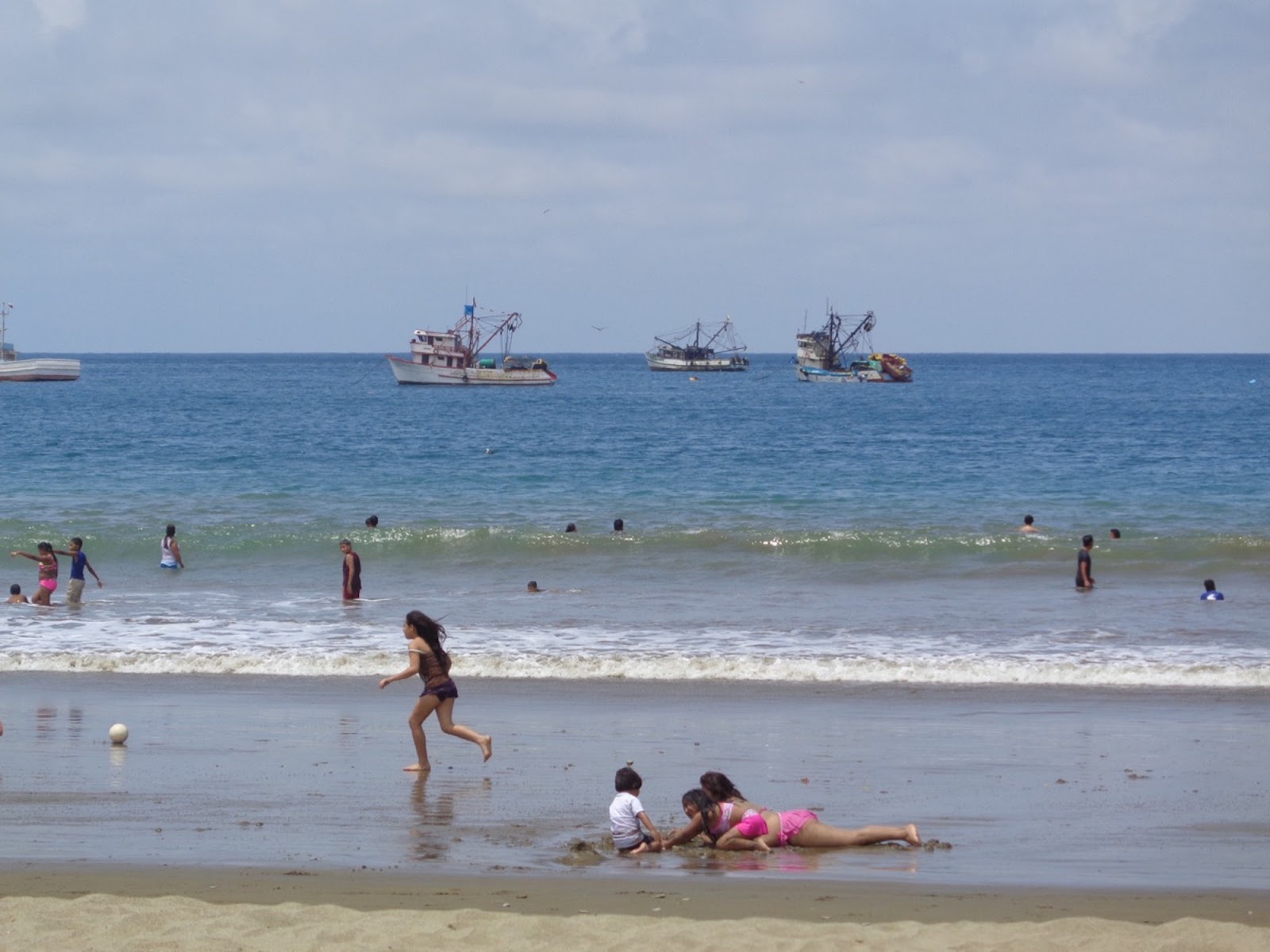

 Pacific.
  One morning, we talked with a tour guide who had been escorting a group of Dutch tourists around the country, but she was heading back to Quito. Anyway, she's the person who
  identified our animals from Las Cajas National Park as being llamas, not alpacas.
 Sol, but the spondylus shells were used as money so the Ministry of Tourism decided to change the name, preserving the history of the local shells.
 She
She  also
also  explained that the people living on the coast don't celebrate the Day of the Deceased (2 November) as much as people in the foothills,
  highlands, and mountain regions. While the Day of the Deceased is sort of Catholic, more of the traditions date back to the beliefs and celebrations of the indigenous people. So the more celebratory events occur in the more traditional and indigenous communities. Places like the coastal towns are comprised of people who are of more Spanish descent, or even from other places in South America, and so there might be some casual picnic at the cemetery, but it's more of a social thing here.
 So after our two days, we needed to head back toward Guayaquil. We ended up opting to drive all the way to the city, since we couldn't
  find a hotel in the small towns along the inland route.
  would have headed home after the long weekend, rather than on Tuesday. But apparently many people also took Tuesday off from work, and were driving home then.
 eye on traffic, with almost like checkpoints. At one in particular, one officer seemed to be filming every driver and passenger in every single vehicle, on his smart phone. NO idea if this was to record drivers, or if they were looking for one person in particular and were using some kind of facial recognition app. It was really bizarre!
 was only half as wide as the actual lane for traffic - and then cutting into the lane, slowing traffic even more. It was a mess!
 Guayaquil, after hours on the road, but without a hotel reservation. We figured we'd head to the airport and get a room in the same hotel where we'd stayed previously, especially since we were returning the car the next morning. Well, somehow we missed the signs for the airport, and ended up heading into the city. So we pulled into a strip mall, and asked two policemen for directions. But with their minimal English, and our minimal Spanish, we couldn't quite figure out all the directions.